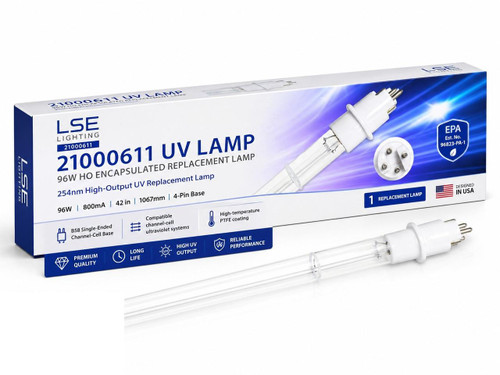
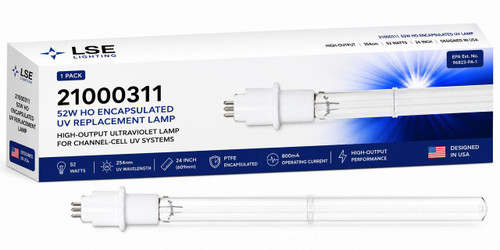
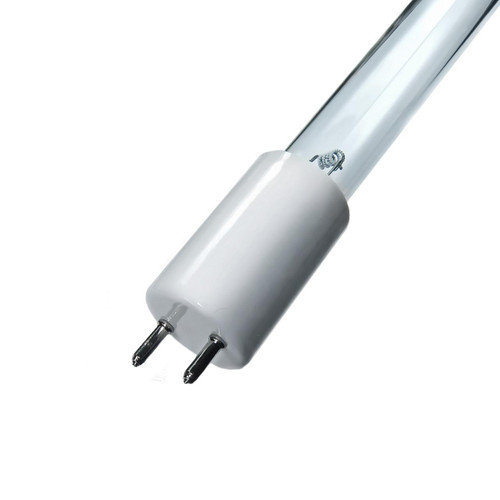
Description of 21000611 96W HO Encapsulated UV Replacement Lamp
Professional-Grade High-Output Lamp with High-Temperature PTFE Protection
The LSE Lighting® 21000611 is a professional-grade, 96-watt high-output ultraviolet replacement lamp designed for compatible channel-cell UV equipment requiring a 42-inch lamp, 800mA operating current, and B58 four-pin single-ended base.
The lamp is encapsulated in a high-temperature PTFE protective coating that provides an additional containment barrier around the quartz tube. Producing ultraviolet output at 254nm, the 21000611 is engineered for precise fit, dependable operation, and consistent performance in compatible commercial and industrial UV systems.
Key Product Benefits
96-Watt High-Output Performance
The 21000611 operates at 96 watts and 800mA to provide dependable high-output ultraviolet performance in compatible channel-cell systems.
High-Temperature PTFE Encapsulation
The quartz lamp is enclosed within a specialized high-temperature PTFE protective coating. This encapsulated construction provides an added barrier around the lamp for applications requiring a protected lamp configuration.
254nm Ultraviolet Output
Produces ultraviolet energy at a wavelength of 254nm to match the operating specifications of compatible UV equipment.
Precise 42-Inch Lamp Configuration
The lamp measures approximately 42 inches, or 1067mm, and is designed for installation in compatible systems requiring this specific lamp length.
B58 Four-Pin Single-Ended Base
Features a B58 four-pin single-ended channel-cell base designed for secure connection and proper alignment in compatible lamp sockets.
Professional LSE Lighting Quality
Manufactured and sold under the LSE Lighting® brand and produced in an EPA-registered establishment for consistent product identification and manufacturing traceability.
Technical Specifications
- Brand: LSE Lighting®
- LSE Lighting Model: 21000611
- Product Type: Encapsulated High-Output UV Replacement Lamp
- Lamp Power: 96 Watts
- Operating Current: 800mA
- Ultraviolet Wavelength: 254nm
- Lamp Length: Approximately 42 inches
- Lamp Length in Millimeters: Approximately 1067mm
- Protective Encapsulation: High-temperature PTFE coating
- Base Type: B58
- Base Configuration: Four-pin, single-ended channel-cell base
- Lamp Construction: Quartz UV lamp with PTFE protective encapsulation
- Intended Equipment: Compatible channel-cell ultraviolet systems
- EPA Establishment No.: 96823-PA-1
- Package Quantity: 1 replacement lamp
Compatibility Information
This LSE Lighting replacement lamp is intended for compatible ultraviolet systems requiring the following specifications:
- 21000611 lamp reference
- 96-watt high-output operation
- 800mA operating current
- 42-inch / 1067mm overall lamp length
- High-temperature PTFE encapsulation
- B58 four-pin single-ended channel-cell base
Before ordering, compare the existing lamp’s model number, wattage, operating current, overall length, base style, pin configuration, and encapsulation requirements with the specifications shown on this page.
A lamp with a similar appearance may not be electrically or mechanically compatible. Equipment requirements may vary by system revision, production date, or installation configuration.
Recommended Replacement and Installation
Replace the lamp according to the maintenance schedule provided by the equipment manufacturer. Ultraviolet output may decrease over time even when the lamp remains visibly illuminated.
Always disconnect power from the UV equipment before removing or installing the lamp. Handle the lamp carefully, avoid placing excessive pressure on the quartz tube or protective coating, and confirm that the four-pin base is correctly aligned before insertion.
Installation should be completed in accordance with the equipment manufacturer’s instructions and all applicable electrical and workplace-safety procedures.
Why Choose LSE Lighting®
LSE Lighting specializes in professional replacement lamps for residential, commercial, and industrial ultraviolet equipment. Our lamps are developed around accurate electrical specifications, dimensions, base configurations, and equipment compatibility to help customers select the proper replacement for their systems.
Brand and Compatibility Disclosure
This product is manufactured and sold exclusively under the LSE Lighting® brand.
LSE Lighting is not affiliated with, sponsored by, authorized by, or endorsed by any third-party equipment manufacturer or brand referenced in this listing. All third-party company names, brand names, trademarks, product names, and model numbers are used solely for identification, reference, and compatibility purposes.
“Teflon” is a trademark of a third party and, where referenced, is used solely to describe the applicable PTFE material type. This product is manufactured and supplied under the LSE Lighting® brand.
Specs
- Brand:
- LSE Lighting
- EPA:
- manufactured in EPA Registered Establishment No. 96823-PA-1
- Type:
- UV Lamp - Wavelength: 254nm
- Base Type:
- B58 - Four-pin, single-ended channel-cell base
- Length:
- Approximately 42 inches
- Wattage:
- 96W
- Operating Current:
- 800mA
FAQs
There are three main types of ultraviolet (UV) light bulbs based on the specific range of the UV spectrum they emit:
- UVA (Long-wave UV): UVA light bulbs emit ultraviolet radiation with a wavelength range of 315 to 400 nanometers. These bulbs are often used in applications such as blacklight effects, UV curing of materials, insect traps, and some medical and dermatological treatments.
- UVB (Medium-wave UV): UVB light bulbs emit ultraviolet radiation with a wavelength range of 280 to 315 nanometers. They are commonly used in phototherapy treatments for certain skin conditions, vitamin D production, and reptile or amphibian lighting in terrariums.
- UVC (Short-wave UV): UVC light bulbs emit ultraviolet radiation with a wavelength range of 100 to 280 nanometers. These bulbs are primarily utilized for germicidal applications, including air and water disinfection, surface sterilization, and in healthcare settings to kill bacteria, viruses, and other pathogens.
It's important to note that UVC light is the most harmful to living organisms and can be dangerous to human skin and eyes, requiring special precautions when handling or using UVC light bulbs.
Choosing the right UV light bulb for your specific application involves considering several factors. Here are some key considerations to help you make an informed decision:
- Determine the UV wavelength range: Identify the appropriate UV wavelength range required for your application. Different UV light bulbs emit radiation in specific ranges such as UVA, UVB, or UVC. Ensure the bulb you choose matches the desired wavelength for optimal effectiveness.
- Understand the intensity and output: Consider the desired intensity and output of the UV light. Some applications may require higher intensity or specific power output levels. Check the specifications of the bulbs to ensure they meet the required standards.
- Evaluate bulb lifespan and durability: Assess the expected lifespan and durability of the UV light bulb. Longer-lasting bulbs may be more suitable for applications where frequent replacement is not desirable. Additionally, consider factors like shock resistance and resistance to environmental conditions if applicable.
- Consider safety measures: Be aware of safety requirements for your specific application. If the UV light poses a risk to human health, ensure the bulb you choose has necessary protective features, such as a UV-blocking coating or a protective housing.
- Review manufacturer recommendations: Check the manufacturer's recommendations and guidelines for the specific application you have in mind. Manufacturers often provide detailed information on suitable bulb types and models for different purposes.
- Seek expert advice if necessary: If you are unsure about which UV light bulb to choose or have specific technical requirements, consult with experts in the field or professionals familiar with UV lighting applications. They can provide guidance based on their expertise and experience.
By considering these factors and seeking appropriate guidance, you can select the right UV light bulb that best matches your specific application needs.
The main difference between UVA, UVB, and UVC light bulbs lies in the wavelength range of ultraviolet (UV) radiation they emit and their effects on living organisms:
- UVA (Long-wave UV): UVA light bulbs emit ultraviolet radiation with a wavelength range of 315 to 400 nanometers. UVA radiation is the least harmful to living organisms, including humans, compared to UVB and UVC. It is commonly associated with blacklight effects, tanning beds, and certain medical and dermatological treatments.
- UVB (Medium-wave UV): UVB light bulbs emit ultraviolet radiation with a wavelength range of 280 to 315 nanometers. UVB radiation is more energetic than UVA and is partially absorbed by the Earth's ozone layer. It is responsible for the synthesis of vitamin D in the skin and is often used in phototherapy treatments for certain skin conditions. However, prolonged exposure to UVB radiation can cause sunburn, skin damage, and increase the risk of skin cancer.
- UVC (Short-wave UV): UVC light bulbs emit ultraviolet radiation with a wavelength range of 100 to 280 nanometers. UVC radiation is the most energetic and harmful to living organisms, including bacteria, viruses, and other pathogens. It is primarily utilized for germicidal applications such as air and water disinfection, surface sterilization, and in healthcare settings. UVC radiation is typically absorbed by the Earth's atmosphere and does not reach the Earth's surface in significant amounts.
It's important to note that UVC light is particularly dangerous to human skin and eyes and should be used with appropriate precautions and protective measures. When using UV light bulbs, it's essential to understand the specific wavelength range and potential risks associated with each type of UV radiation.
UV light disinfection, also known as ultraviolet germicidal irradiation (UVGI), is a process that uses ultraviolet (UV) light to inactivate or destroy microorganisms such as bacteria, viruses, and mold. UV light bulbs can indeed be effective in killing germs and bacteria when used properly.
Here's how UV light disinfection works:
- UV-C Radiation: UV-C light, in the wavelength range of 200 to 280 nanometers, is primarily used for disinfection purposes. UV-C light has germicidal properties and can damage the genetic material (DNA or RNA) of microorganisms, preventing their replication and rendering them inactive or unable to cause infections.
- Exposure Time and Intensity: Effective UV disinfection requires sufficient exposure time and intensity of UV-C radiation. The microorganisms need to be exposed to the UV light for an adequate duration to ensure effective inactivation.
- Direct Line of Sight: UV light disinfection is most effective when there is direct line-of-sight exposure between the UV light source and the target surface or object. Shadows or obstructions can reduce the effectiveness of the disinfection process.
- Proper Placement: UV light bulbs should be appropriately positioned to ensure maximum coverage and exposure to the surfaces or objects that need disinfection. Multiple bulbs or reflective surfaces may be used to enhance coverage in larger areas.
It's important to note that while UV light disinfection can be effective in killing many types of germs and bacteria, it may not be effective against all pathogens or in every situation. Factors such as the type and sensitivity of the microorganism, UV dose, and proper application play a significant role in the effectiveness of UV disinfection.
When using UV light bulbs for disinfection, it is crucial to follow manufacturer instructions, maintain safety precautions, and ensure that humans and animals are not directly exposed to the UV light, as it can be harmful to skin and eyes.
When using UV light bulbs, it is important to take proper safety precautions to minimize the risk of harm to yourself and others. Here are some key safety measures to consider:
- Avoid Direct Exposure: Do not look directly at UV light bulbs, especially UVC bulbs, as they can be harmful to the eyes and skin. Direct exposure to UV radiation can cause damage and increase the risk of eye injury or skin burns.
- Use Protective Gear: Wear appropriate protective gear such as UV-blocking glasses or goggles to shield your eyes from UV radiation. Additionally, use gloves and protective clothing to minimize direct skin exposure.
- Follow Manufacturer Guidelines: Read and follow the manufacturer's instructions and safety guidelines for the specific UV light bulbs you are using. This includes information on recommended usage, installation, maintenance, and any specific safety precautions.
- Ventilation: Ensure proper ventilation when using UV light bulbs that emit ozone. Ozone can be harmful when inhaled in high concentrations. Use UV light bulbs in well-ventilated areas or consider using additional ventilation equipment to minimize ozone accumulation.
- Secure Bulbs and Fixtures: Properly install and secure UV light bulbs and fixtures to prevent accidental breakage or damage. Ensure that the bulbs are securely fastened and positioned to avoid the risk of falling or shattering.
- Keep People and Pets Away: Restrict access to areas where UV light bulbs are in use. Ensure that people and pets are not directly exposed to the light. Consider using physical barriers or signage to indicate the presence of UV light.
- Maintenance and Replacement: Regularly inspect UV light bulbs for any signs of damage or deterioration. Replace bulbs as recommended by the manufacturer to maintain optimal performance and safety.
- Training and Awareness: If using UV light bulbs in a professional or industrial setting, ensure that individuals operating or working in the vicinity are adequately trained on safety protocols and aware of the potential hazards associated with UV light exposure.
By following these safety precautions, you can help minimize the risk of harm and ensure safe usage of UV light bulbs.
The lifespan of UV light bulbs can vary depending on the specific type, brand, and usage conditions. However, as a general guideline, UV light bulbs typically have a lifespan ranging from 6,000 to 14,000 hours of continuous use.
Here are some factors to consider regarding the lifespan and replacement of UV light bulbs:
- Manufacturer's Specifications: Refer to the manufacturer's specifications or documentation for the specific UV light bulb you are using. They usually provide information about the estimated lifespan and any recommended replacement intervals.
- Usage Patterns: The actual lifespan of UV light bulbs can be influenced by how often and for how long they are used. If the bulbs are used continuously or for extended periods, they may need replacement sooner than bulbs used intermittently.
- Output Degradation: Over time, the intensity of UV radiation emitted by the bulbs may decrease. Even if the bulb is still functional, the reduced UV output may affect its effectiveness for certain applications, such as disinfection. If you notice a significant decline in performance or diminished UV output, it may be time to replace the bulb.
- Regular Inspections: Periodically inspect the UV light bulbs for any signs of damage, discoloration, or irregularities. If you notice any cracks, blackening, or flickering, it is a sign that the bulb may be deteriorating and should be replaced.
- Maintenance Recommendations: Follow any maintenance recommendations provided by the manufacturer. This may include cleaning the bulbs or fixtures to ensure optimal performance and longevity.
It is important to replace UV light bulbs in a timely manner to ensure their effectiveness and maintain the desired level of UV radiation output. following the manufacturer's guidelines and conducting regular inspections will help you determine when it is necessary to replace UV light bulbs.
Proper cleaning and maintenance of UV light bulbs are essential for ensuring their optimal performance and longevity. Here are some guidelines to follow:
- Safety First: Before performing any cleaning or maintenance tasks, ensure that the UV light bulb is turned off and disconnected from the power source. Allow the bulb to cool down completely before handling.
- Use a Soft Cloth: Gently wipe the exterior surface of the UV light bulb using a soft, lint-free cloth. Avoid using abrasive materials or harsh chemicals, as they can damage the bulb's surface or affect its performance.
- Remove Dust and Debris: If there is visible dust or debris on the bulb, you can use a soft brush or compressed air to carefully remove it. Be gentle to avoid damaging the bulb or altering its alignment.
- Check for Damage: Inspect the bulb for any signs of damage, such as cracks, blackening, or discoloration. If you notice any damage, the bulb may need to be replaced to maintain optimal performance.
- Clean the Fixture: If the UV light bulb is installed in a fixture, clean the fixture as per the manufacturer's instructions. Dust or dirt buildup on the fixture can reduce the effectiveness of UV radiation and potentially cause heat buildup.
- follow Manufacturer's Recommendations: Consult the manufacturer's documentation or guidelines for specific cleaning and maintenance instructions tailored to the UV light bulb you are using. Some manufacturers may provide specific recommendations for cleaning agents or procedures.
- Regular Inspections: Conduct periodic inspections of the UV light bulb to ensure that it is functioning correctly and efficiently. Check for any changes in output, flickering, or abnormal behavior. If you notice any issues, it may be necessary to replace the bulb.
Remember to follow safety precautions, such as wearing protective gloves, when handling UV light bulbs, as they can be fragile. Additionally, always refer to the manufacturer's recommendations for the specific UV light bulb model you are using to ensure proper cleaning and maintenance procedures.

Determined at checkout.
Write a Review